
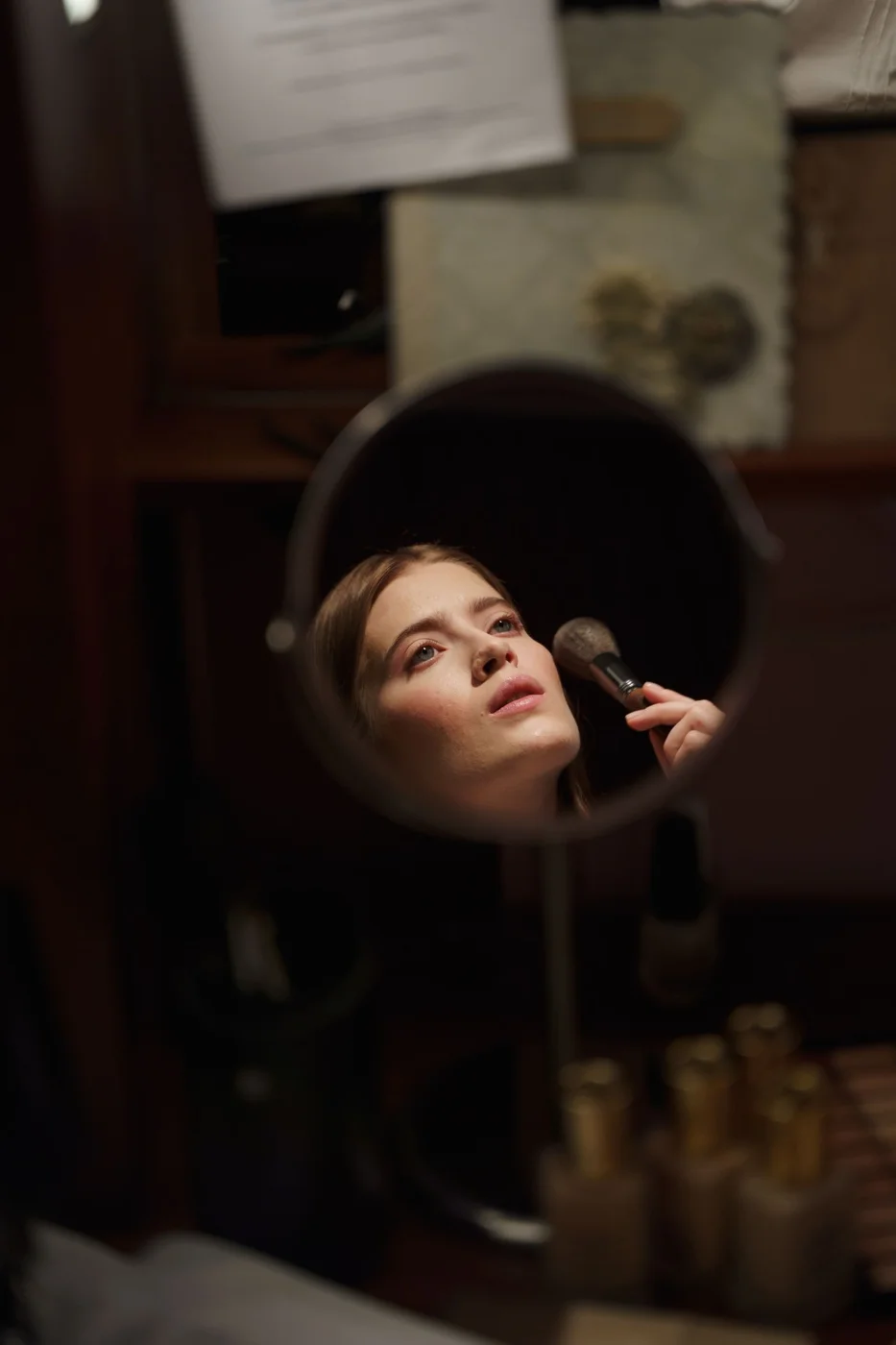
The hairstyle is part of the preparation
A character might enter with immaculate hair and leave looking dishevelled. That change invites us to look beyond an attractive result: what has happened to them, how much time seems to have passed and how their appearance relates to the scene we have just watched.
The Royal Shakespeare Company describes a process beginning with conversations between its wigs and makeup team, the designer, director and cast. It also prepares folders of references and photographs so the chosen look can be recreated at each performance. Transformation calls for a good record as well as imagination.
Work that can go unnoticed
The company explains that it may style a performer’s own hair, add hairpieces or create a wig. That range helps us move beyond the idea that the craft is only about extravagant hairstyles. An understated result deserves attention too.
Helen Casey’s book in the National Theatre Backstage Guides series presents research, fittings and quick changes as parts of this work. We use it here as an introduction to the craft, not a product manual or an invitation to experiment with adhesives on your skin.
Notice the design, respect the person
Try a paper exercise: draw three head silhouettes for an invented character who arrives at a party, waits for someone and goes home. Change only the shape of the hairstyle. What impression does each version give you? Then imagine the character feeling the opposite of what their appearance suggests.
It is a reminder that appearance alone cannot reveal a personality. When discussing a performance, focus on visible design choices and how they relate to the scene. There is no need to guess what the performer’s hair is like away from the theatre. Finding out who designed or made the work can be a much more interesting place to finish.
Sources and further reading
Evergreen guide. Sources consulted on 23 October 2026. This is not a premiere announcement and does not confirm current performances, tickets or availability.